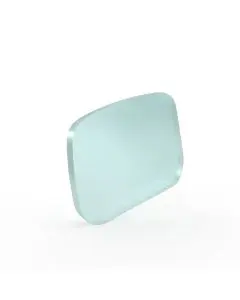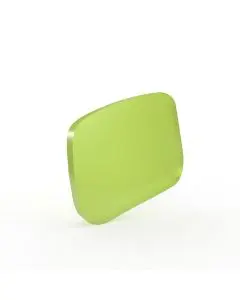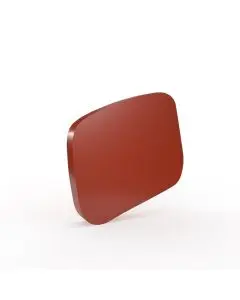
Laser Welding Glasses

Laser does a far better job than traditional welding, providing maximum precision and high versatility, as it can weld metal and plastic with impeccable accuracy.

If you need assistance choosing the right level of protection for your application, please email our sales department or give us a call at 800-521-9746

Search by Wavelength and OD

Enter the wavelength and OD you require. You can add up to three wavelengths and ODs.

nm
OD
Please fill out the nanometer (nm) field.
View as Grid List

Items 1-12 of 13

Set Descending Direction
Page
per page

Laser Welding Safety Glasses: Comprehensive Protection Against Hazardous Radiation

Unlike conventional welding processes that emit broad-spectrum radiation, laser welding produces highly concentrated, coherent light capable of penetrating directly to the retina. This poses a severe risk as laser radiation bypasses the natural blink reflex, leading to potential irreversible retinal damage.

Personnel engaged in laser welding operations must utilize industry-certified protective eyewear designed to mitigate direct, reflected, and scattered laser radiation. Given that industrial laser systems commonly exceed 1000 watts of output power, even diffused reflections can induce severe ocular injuries. 

Optical Density (OD), Wavelength and VLT Considerations

Laser welding safety glasses must feature wavelength-specific attenuation matched precisely to the operating laser system. Optical Density (OD) values quantify the logarithmic reduction of laser energy at designated wavelengths, ensuring appropriate shielding levels:

  • OD 5: Blocks 99.999% of laser energy at the defined wavelength
  • OD 7: Blocks 99.99999% of laser radiation, enhancing protection

Laser Type and Corresponding OD Requirements for Welding:

  • Nd:YAG & Fiber Lasers (1064nm): OD 6+ recommended
  • Diode Lasers (800-980nm): OD 8+ typically recommended
  • CO₂ Lasers (10600nm): OD 6 or greater is recommended

For environments utilizing multiple laser systems, protective lenses must integrate multi-wavelength filtration to ensure comprehensive shielding.

Effective laser welding protective glasses balance maximum protection with sufficient visibility to perform precision work. This balance is achieved through Visible Light Transmittance (VLT) optimization—the percentage of visible light allowed through while blocking hazardous laser wavelengths. VLT is a key factor in ensuring both safety and the ability to see clearly while working with lasers. Appropriate lighting conditions must be considered, as darker filters necessitate higher ambient illumination. For automated laser welding setups, higher VLT filters may be viable due to greater operational distance. It is always a good idea to refer to the laser manual for recommendations for VLT and OD based on the specific laser and its intended use.

Frame Engineering and Coverage Optimization

Laser safety frames must provide wraparound coverage to safeguard against indirect radiation and reflective exposure. Key considerations include:

  • Side Shields for eliminating peripheral exposure risks
  • Fitover Designs for accommodating prescription glassess
  • Industrial Durability to withstand hazardous environments
  • High-risk welding stations often require hybrid safety solutions integrating both conventional impact resistance and laser-specific filtration.

Application-Specific Protection Guidelines

Different laser welding systems demand tailored eyewear solutions based on operational power and emission characteristics:

  • Fiber Laser Welding (1070nm): OD 6+ minimum for production use
  • Nd:YAG Lasers (1064nm, 532nm, 355nm): Multi-wavelength protection required
  • CO₂ Laser Welding (10600nm): Infrared-specific shielding; radiation is non-transparent but must be fully contained
  • Pulse-based and ultrafast laser systems exhibit transient high-peak power, necessitating OD ratings designed for extreme energy densities beyond their average operational output.

Regulatory Compliance and Certification Standards

Laser protective eyewear must adhere to ANSI Z136.1 safety standards, ensuring:

  • Spectrophotometric verification of OD values
  • Damage resistance testing under real-world industrial conditions
  • Environmental durability validation

Maintenance and Operational Longevity
 
To preserve safety integrity, laser welding glasses require periodic inspection and maintenance:

  • Surface Assessment for scratches or coating degradation
  • Manufacturer-Approved Cleaning Solutions
  • Proper Storage Protocols to minimize contamination and wear

High-usage environments may mandate replacement intervals between 1-3 years depending on exposure intensity and operational factors.

Choosing the Right Laser Welding Safety Glasses

Optimizing laser protection involves comprehensive assessment of welding operations:

  1. Identify Laser System Specifications: Wavelength, power output, and beam characteristics
  2. Evaluate Facility Exposure Risks: Potential reflection paths, enclosure containment, and workflow variables
  3. Determine User Requirements: Prescription lens compatibility, operational comfort, and task visibility
  4. Factor Environmental Conditions: Ambient temperature, humidity, and potential impact hazards
  5. When selecting protective eyewear, prioritize durability, multi-wavelength shielding, and certified compliance with safety standards.

Industry-Leading Laser Welding Glasses from NoIR

Invest in premium-quality NoIR laser safety glasses, engineered for optimal protection and visibility. NoIR offers a wide selection of certified eyewear tailored to industrial laser applications.

Contact Sales at [800-521-9746] for expert assistance in selecting the right protection for your facility.