My Wish List
Toggle Nav

Search
Cart
Please note that all products are custom-made to order, with a lead time of 7 - 10 days till ship date.
Request or change/cancellation must be received within 24 hours of order confirmation to be honored.
Shipping and handling do not include duty, taxes or any costs associated with clearing goods outside of the US.
Understanding Low Vision
Resource Guide for Choosing the Optimal Filter For a Low Vision Eye Condition
In this video series, David Bothner, NoIR's VP of Product and Business Development shares expert information and recommendations regarding evaluation of low vision filters for various eye conditions. Each segment focuses on a specific topic:
- Factors for consideration when identifying the most effective filters for a given visual impairment
- Understanding of visible light spectrum
- Differences between filters and tints
- How the blue blocking filters work
- Pros and cons of polarized lenses
- Low vision assessment protocol
What factors should be considered when identifying the most effective filter for a given eye condition? How do you pick the one with the best lens color and light transmission for a given visual impairment?
This video segment discusses several topics related to choosing the proper filter:
- Patient/client's eye condition/visual acuity assessment and consideration of different factors affecting visual performance in varying environments or lighting conditions
- Things to consider when choosing the darkness level of sunglasses for photophobia or disabling glare
- The goal of a professional assessment when choosing anti-glare filters
Understanding the visible light spectrum
This video segment explains the electromagnetic spectrum emitted by the sun and how certain parts of it factor into the selection of anti-glare protection eyewear.
- Visible light spectrum
- What photoreceptors are and what they are responsible for
- Key elements of the spectrum important in assessing the anti-glare protection
Distininguishing filters from tints
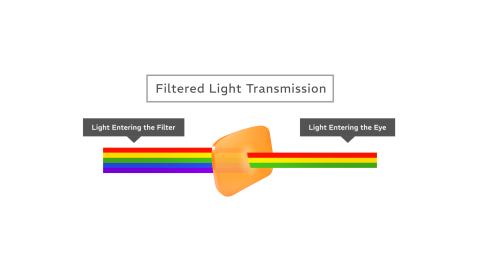
This video segment explains how light is transmitted through a tined lens versus filter lens.
- Difference between light passage through a tinted lens and filter lens
- Explanation of visible light transmittance
- Important considerations for using tinted lenses versus filter lenses for visually impaired individuals
- Advantages of filtered lenses
- The effect of blue light on vision
What are blue blockers and how do they work?
This video segment explains the role of blue blockers for individuals with common eye conditions like glaucoma, retinitis pigmentosa, and macular degenereation.
- Understanding what rods and cones are and what blue blockers do for both to optimize vision
- Finding balance that minimizes glare without compromising overall vision
Pros and cons of polarized lenses
This video segment explains the advantages and disadvantages of polarized lenses
- How polarized lenses work
- Their impact on disability glare
Assessment protocol for visual aids
This video segment explains the the process for selecting the optimal low vision glasses for a particular eye condition or a combination of conditions, with consideration of specific symptoms and other factors affecting vision.
- Understanding the person's visual experience
- Assessment of visual acuity - testing methods and considerations
- Contrast sensitivity check
- Glare protection test
- Identifying the best filter based on the above tests
- Optimal frame selection